Cases by source
Imaging, notes, documents, and updates require a series of steps to reconstruct the operational picture.

The command center, case file, timeline, imaging, operational tools, and assisted workspace all operate within the same workflow. The demo clarifies what can be configured and what requires integration or validation.
A useful platform should provide visibility into the case status, available information, next steps, and responsibilities without replacing a specialist’s assessment.
Imaging, notes, documents, and updates require a series of steps to reconstruct the operational picture.
Discussions and handoffs take place in channels separate from the case and may lack context.
Readiness, activities, and responsibilities must be redefined by different people or tools.
Smart features that lack clear guidelines regarding usage, sources, and oversight actually increase the risk rather than reduce it.
Neurovas AI organizes the treatment pathway and may include assistive functions. The intended use, the role of AI, and the applicable requirements are defined prior to any clinical adoption.
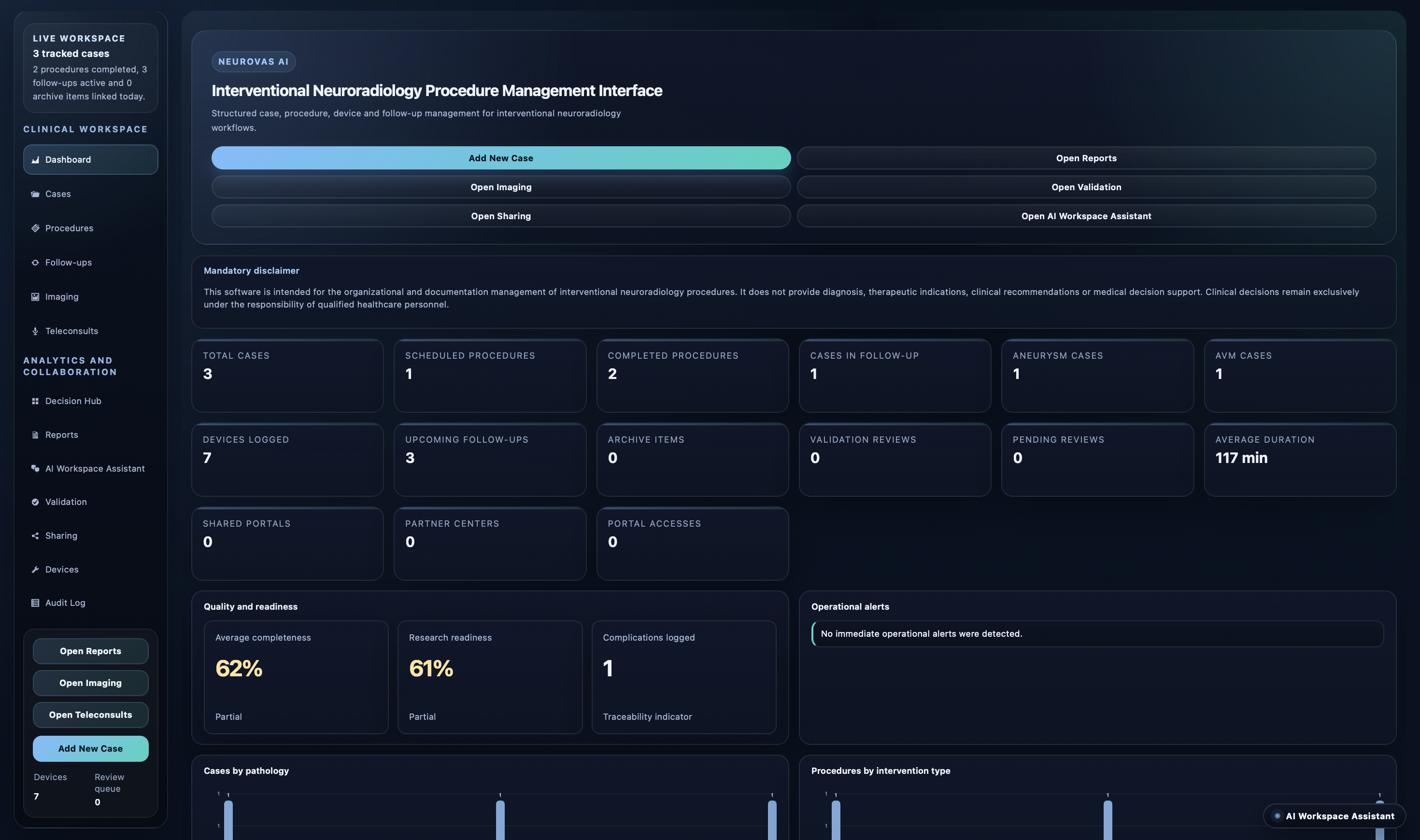
Statuses, signals, and priority tasks consolidated for the authorized team.
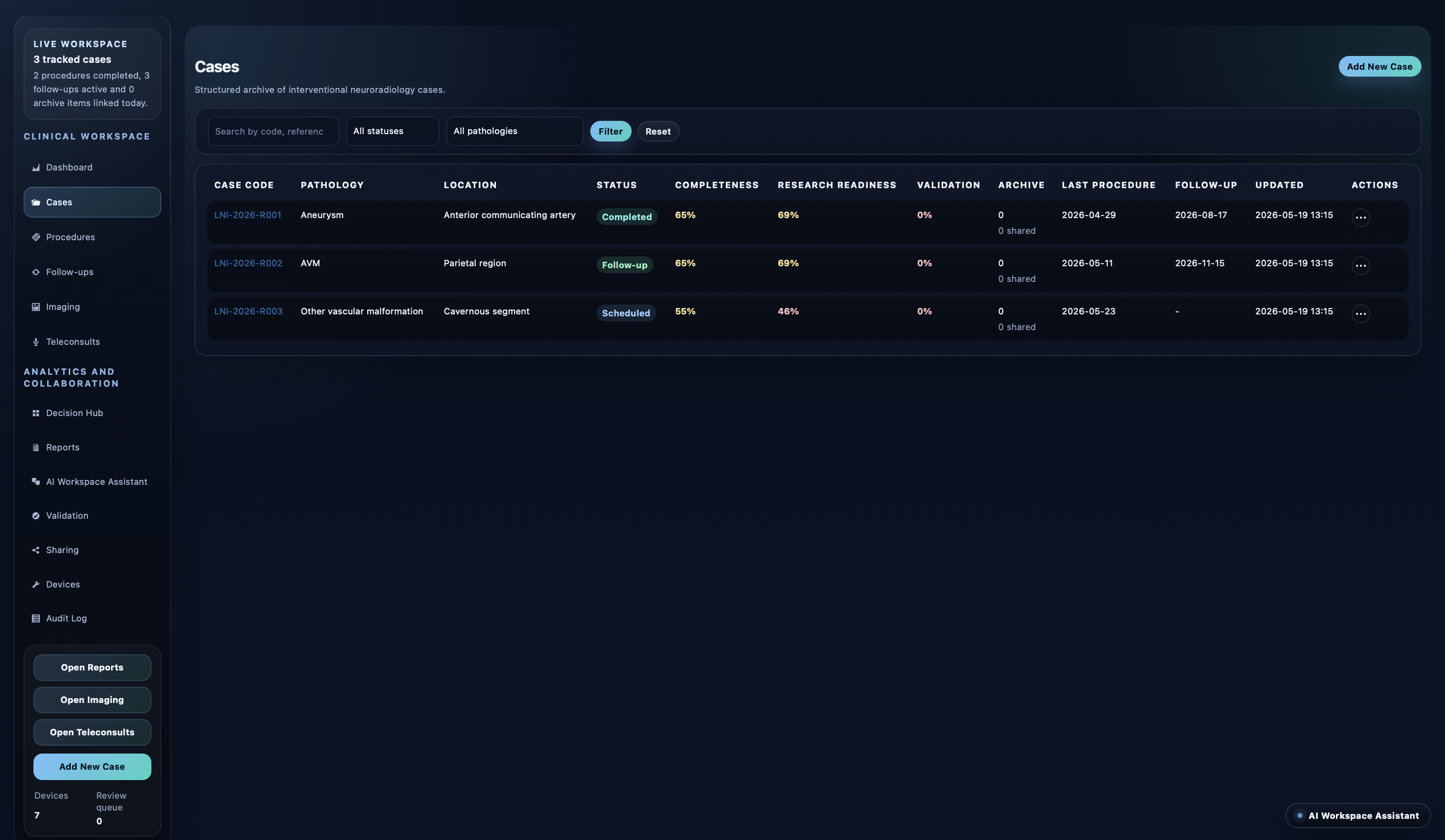
Information and history organized to ensure continuity during reviews and handoffs.
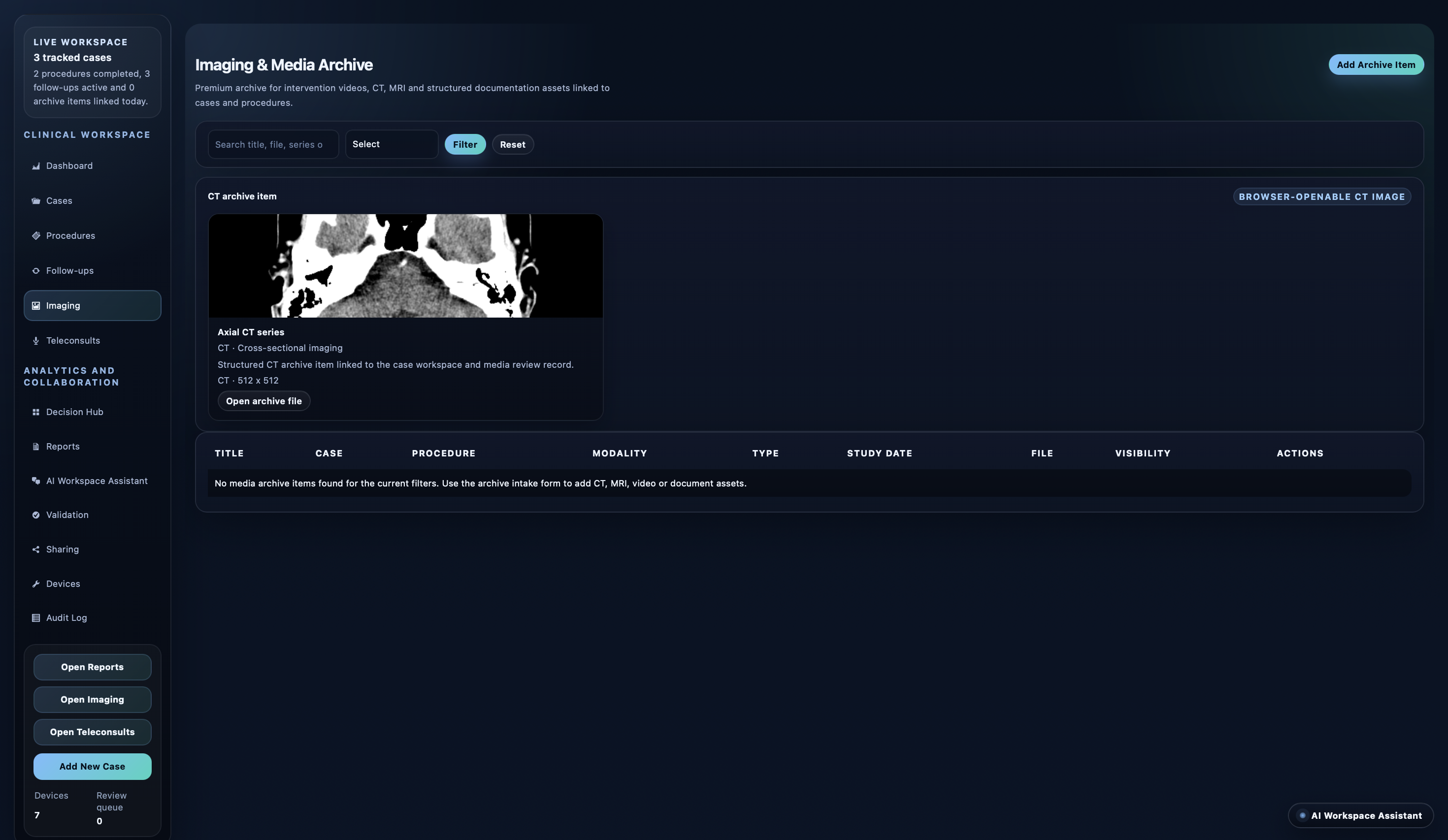
Organized access to case-related materials, including metadata and operational context.
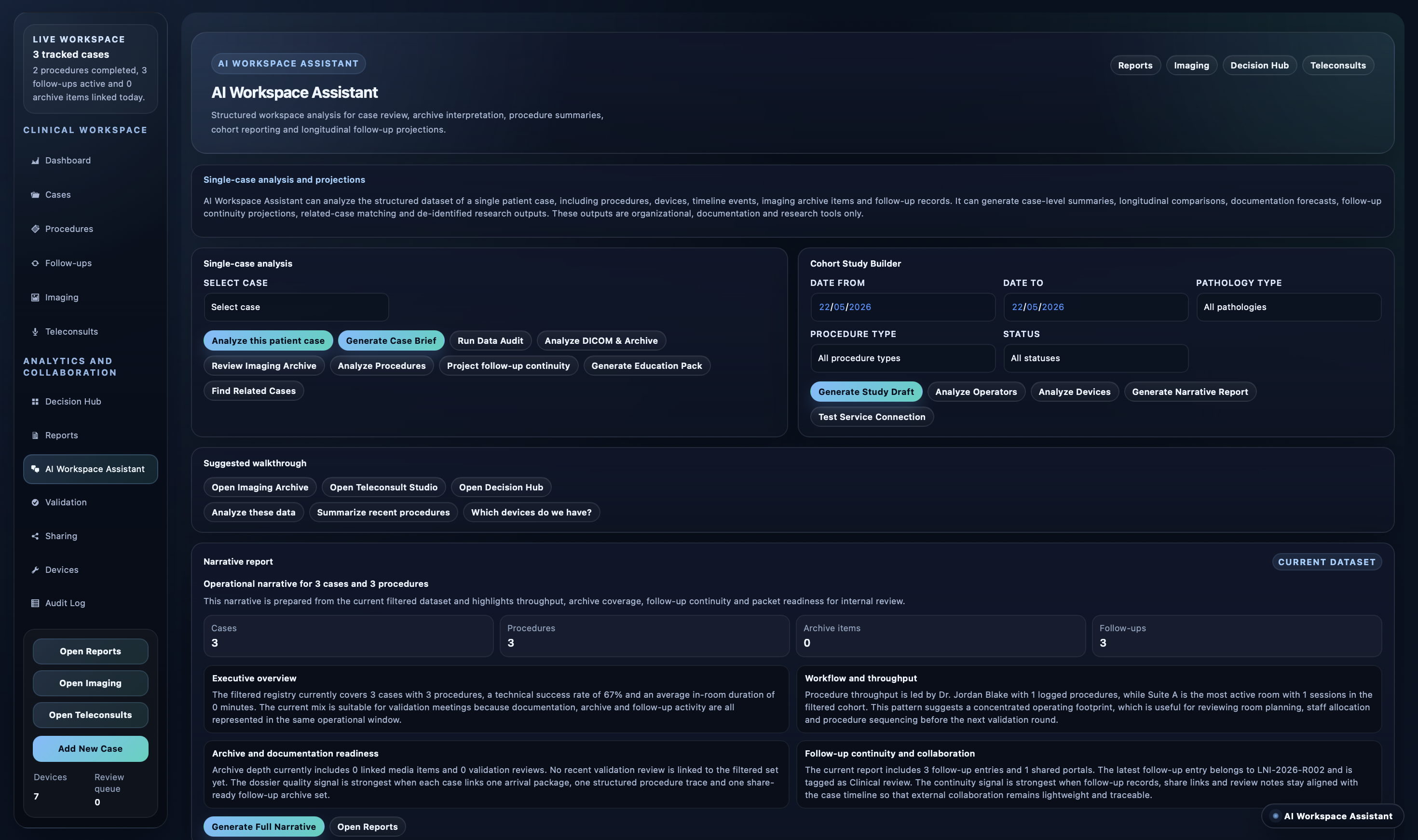
Tools for synthesizing and preparing work, including sources, limitations, and human verification.
Real-life screenshots showing how Neurovas AI brings cases, imaging, activities, and assistive tools together in a single workspace. Select a screenshot to view it in full size.
We define the users, context, objectives, and boundaries of each function, including AI.
We'll demonstrate the workflow that most closely matches the scenario and gather information on gaps, data, and requirements.
Let's analyze integrations, security, data, validation, and applicable requirements.
We are establishing a limited scope with identified users, training, and verification criteria.
The demo is intended to verify the continuity of the workflow and the role of assistive functions, without assuming clinical suitability or integrations that have not been analyzed.
The answers address integration, accountability, security, and adoption without turning assumptions into promises.
The platform is not intended to replace a specialist evaluation. The intended use, the role of the AI functions, and the level of supervision must be defined and evaluated based on the actual project.
Classification cannot be determined in the abstract: it depends on the device’s functions and intended use. Regulatory evaluation is part of the process leading up to relevant clinical use.
The approach is determined based on security and objectives. An initial demonstration may use controlled scenarios; the use of real data requires appropriate verification and agreements.
It depends on the standards, APIs, access points, and architecture of the system. Compatibility is confirmed only after a technical review.
Sources, interfaces, logs, limits, and approval steps are designed on a case-by-case basis. High-risk functions require proportionate assessments and validations.
Please describe the scenario, team, and systems. We will prepare a demo focusing on the process, responsibilities, and requirements for a pilot project.